
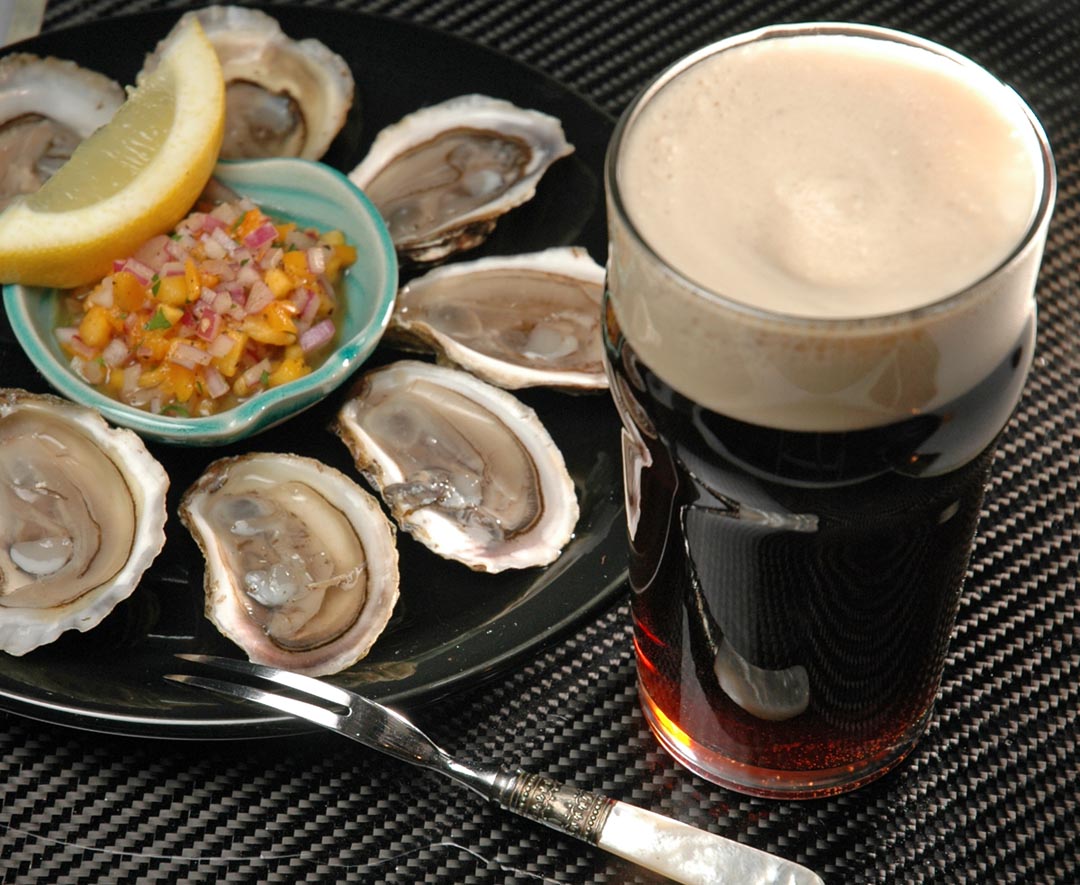
I was involved for a couple of years with a group that was trying to put some logic and science into the often fuzzy thinking around beer and food pairing. I think we made some progress, but one of the things we knew we needed was a literature search. This meant combing through a ton of scientific papers to look for proven interactions, which was not an easy task, since they tended to be buried in research about particular receptors and other biological systems.
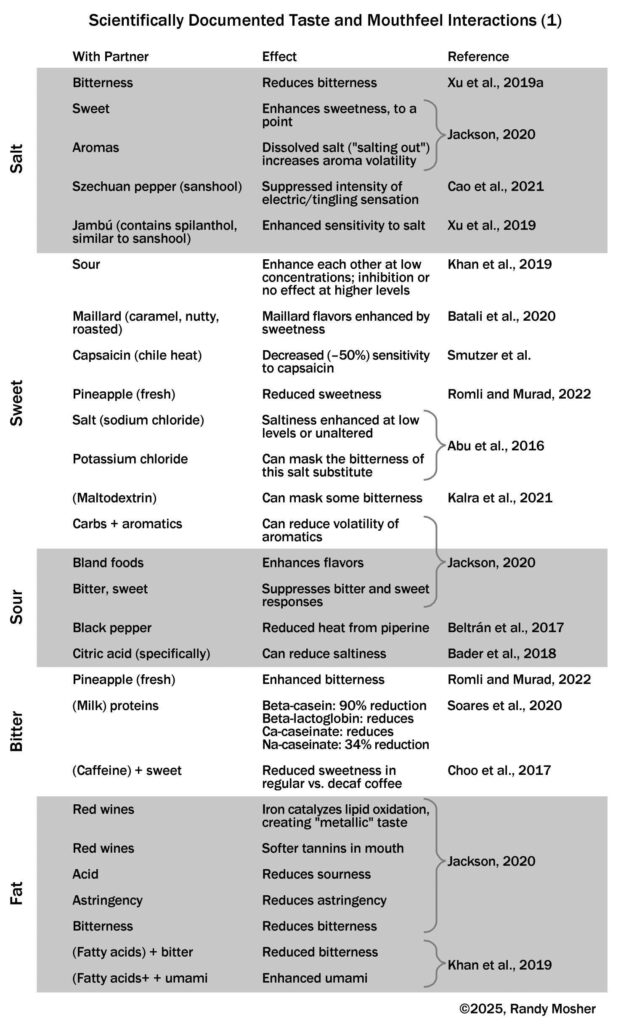
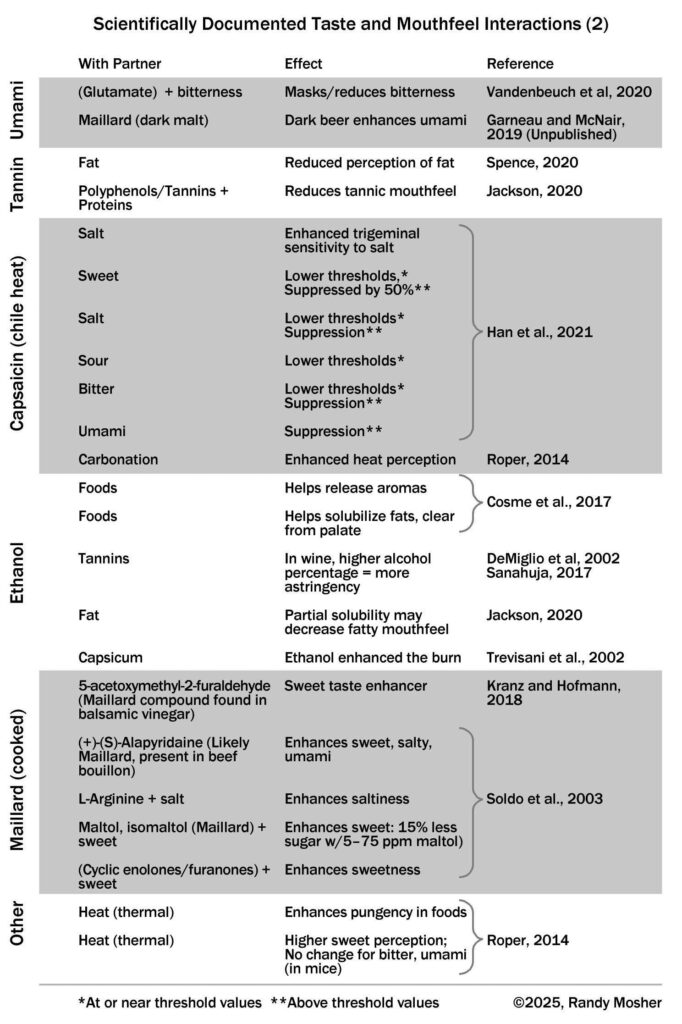
Once I started reading exactly such papers as research for my new book, Your Tasting Brain, I collected every reference I could find that touched on this topic. I covered their conclusions in general terms in the text, but the charts here were too much for the book in terms of size and detail, so I present them here along with the complete list of citations. They apply to wine, beer, or any other alcoholic beverage.
You’ll note that these charts are pretty much limited to taste and mouthfeel characteristics. The aroma aspect of food and drink pairing is every bit as important, but this sense and its integration into flavor is so complex that there’s no practical way I know of to study it rigorously. And besides, this topic is a luxury, not life or death, so it probably doesn’t justify the expenditures needed to really research it. For now, the workings of aroma in pairing must remain mostly informed conjecture. I will say that many of the interactions documented here give scientific explanations for plenty of well-established axioms of pairing, so our conjectures are sometimes right on the money.
References for the charts:
Qingbiao Xu, “Sodium Chloride Suppresses the Bitterness of Protein Hydrolysates by Decreasing Hydrophobic Interactions,” Food Science 84, no. 1 (2019): 86-91, https://doi.org/10.1111/1750-3841.14419.
Ronald S. Jackson, “Wine, food, and health,” Wine Science, April 10 (2020): 947–978, https://doi.org/10.1016/B978-0-12-816118-0.00012-X.
Xiao-Xiao Cao, “The influence of NaCl on the dynamic perception of the pungency sensation elicited by Sichuan pepper oleoresins,” Food Research International 149, November (2021), https://doi.org/10.1016/j.foodres.2021.110660.
Amira S. Khan, “A cross-talk between fat and bitter taste modalities,” Biochimie 159, April (2019): 3-8, https://doi.org/10.1016/j.biochi.2018.06.013.
Mackenzie E. Batali, “Sensory and monosaccharide analysis of drip brew coffee fractions versus brewing time,” Journal of the Science of Food and Agriculture 100, no. 7, May (2020): 2953-2962, https://doi.org/10.1002/jsfa.10323.
Gregory Smutzer, “Detection and modulation of capsaicin perception in the human oral cavity,” Physiology & Behavior Volume 194, 1 October (2018): 120-131, https://doi.org/10.1016/j.physbeh.2018.05.004.
Siti Rashima Romli, “Influence of fresh pineapple intake on human taste detection and recognition thresholds of basic taste stimulants,” Journal of Sensory Studies 37, no.2 (2022): e12729, https://doi.org/10.1111/joss.12729.
Natalie Ben Abu, “The taste of KCl – What a difference a sugar makes,” Food Chemistry 255, 30 July (2018): 165-173, https://doi.org/10.1016/j.foodchem.2018.01.175.
Atin Kalra, “Deciphering molecular mechanics in the taste masking ability of Maltodextrin: Developing pediatric formulation of Oseltamivir for viral pandemia,” Carbohydrate Polymers 260, 15 May (2021): 117703, https://doi.org/10.1016/j.carbpol.2021.117703.
Leopoldo R. Beltrán, “The effect of pungent and tingling compounds from Piper nigrum L. on background K+ currents,” Frontiers in Pharmacology 8, (2017): 408, https://doi.org/10.3389/fphar.2017.00408.
Matthias Bader, “Chemosensate-Induced Modulation of the Salivary Proteome and Metabolome Alters the Sensory Perception of Salt Taste and Odor-Active Thiols,” Journal of Agricultural and Food Chemistry 66, no. 29 (2018): 7740–7749, https://doi.org/10.1021/acs.jafc.8b02772.
Susana Soares, “Tannins in Food: Insights into the Molecular Perception of Astringency and Bitter Taste,” Molecules 25, no. 11 (2020): 2590, https://doi.org/10.3390/molecules25112590.
Aurelie Vandenbeuch, “Optogenetic Activation of Type III Taste Cells Modulates Taste Responses.” Chemical Senses 45, no. 7 (2020): 533–539, https://doi.org/10.1093/chemse/bjaa044.
M. Trevisani, “Ethanol elicits and potentiates nociceptor responses via the vanilloid receptor-1,” Nature Neuroscience 5, May (2002): 546–551, https://doi.org/10.1038/nn0602-852
Charles Spence, “Food and beverage flavour pairing: A critical review of the literature,” Food Research International 133, July (2020), https://doi.org/10.1016/j.foodres.2020.109124.
Pengfei Han, “Peri-threshold Trigeminal Stimulation with Capsaicin Increases Taste Sensitivity in Humans,” Chemosensory Perception 15, no. 1 (2021), https://doi.org/10.1007/s12078-021-09285-4.
Ezen Choo, “Caffeine May Reduce Perceived Sweet Taste in Humans, Supporting Evidence That Adenosine Receptors Modulate Taste,” Journal of Food Science 82, no. 9 (2017): 1750–3841.13836, https://doi.org/10.1111/1750-3841.13836
Fernanda Cosme, “Oenology in the Kitchen: The Sensory Experience Offered by Culinary Dishes Cooked with Alcoholic Drinks, Grapes and Grape Leaves,” Beverages 3, no. 3 (2017), 42, https://doi.org/10.3390/beverages3030042.
Solange Sanahuja, “Spectral Analysis of the Stick slip Phenomenon in Oral Tribological Texture Evaluation,” Journal of Texture Studies 48, no. 4 (2017): 318 34, https://doi.org/10.1111/jtxs.12266.
Palmina DeMiglio, “Astringent sub-qualities elicited by red wine: the role of ethanol and pH,” Conference: the International Bacchus to The Future Conference, St. Catharines, Ontario (2002), http://hdl.handle.net/10464/1526.
Maximilian Kranz, “Food-Grade Synthesis of Maillard-Type Taste Enhancers Using Natural Deep Eutectic Solvents (NADES),” Molecules 23 no. 2 (2018): 261, https://doi.org/10.3390/molecules23020261
Tomislav Soldo, “(+)-(S)-Alapyridaine—A General Taste Enhancer?,” Chemical Senses 28, no. 5 (2003): 371–379, https://doi.org/10.1093/chemse/28.5.371
Nicole L. Garneau and Bryan K. McNair, “Relationship between taste detection and chemical characteristics of beer,” (2019) Unpublished.
Stephen D. Roper, “TRPs in Taste and Chemesthesis,” Handbook of Experimental Pharmacology 223, (2014): 827–71, https://doi.org/10.1007/978-3-319-05161-1_5.