
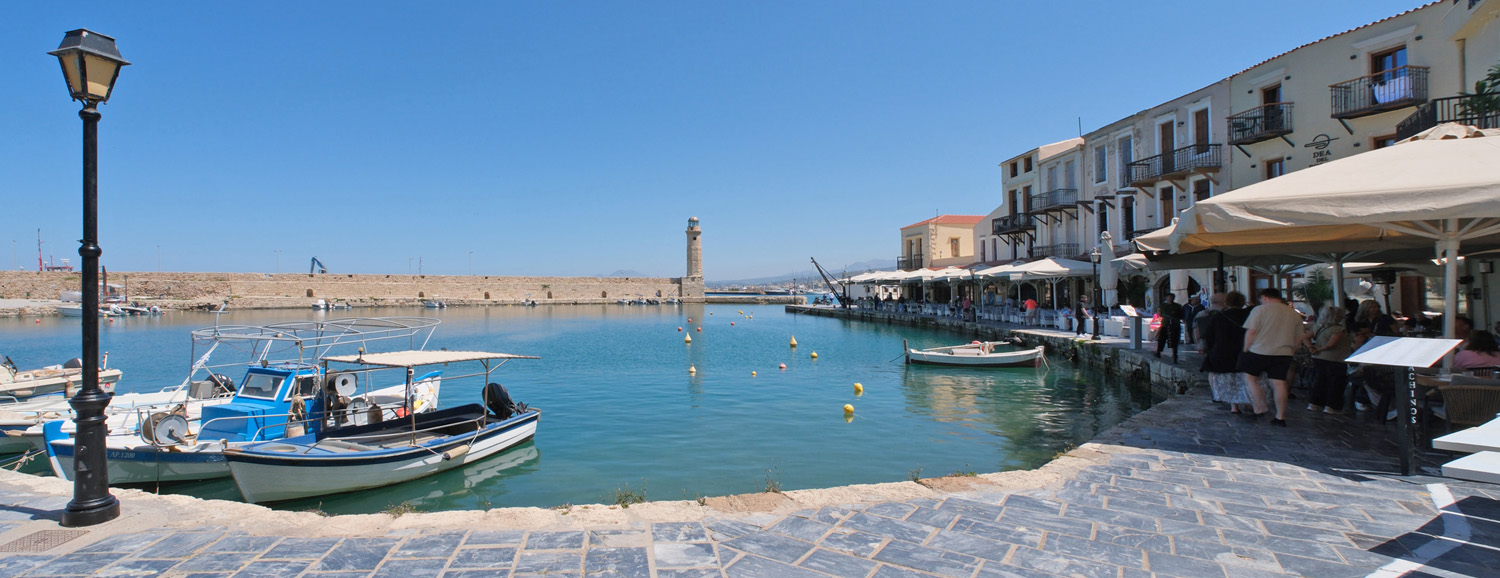
Recently, my wife Nancy, myself and another couple were fortunate enough to be able to make a trip to experience Southern Greece. In addition to avoiding cruise ship stops like Santorini, the trip’s backbone was constructed to get us to several historical/archaeological sites: Athens, Delphi and ancient Mycenae on the mainland; Knossos and the towns of Heraklion, Rethymno and Chania on Crete. Our thinking was that these places, in additional to their educational value, would get us to beautiful, interesting places with great food and wine, which turned out to be a pretty good guess.
Greek food has a long history, starting in the Neolithic with wild harvesting, and a little domestication. By Bronze Age Minoan culture, many animals and food plants had been domesticated; a fresco from Knossos shows people—and monkeys!—harvesting saffron from crocuses. Changes and cross-currents continued to occur throughout Mycenaean, classical Greek and Roman eras, to Byzantine, Venetian, Ottoman and even modern epochs, all mixing and broadening the foodways. Greece is also blessed with varying ecological niches, from sea to semi-arid Mediterranean vistas to lush mountains, giving it an equally rich landscape of foods to choose from. New World foods like tomatoes, squash and beans quickly found homes there too.
We knew that the Americanized version of Greek food like the saganaki cheese burning in Chicago’s Greektown and gyros in countless joints across the country were just a shadow of the real deal. But until you go, there’s no way to know precisely what this means. With diaspora communities, collective memory drifts and innovation stops as one must cook for less informed diners. The same thing happens in Chicago’s blues clubs: tourists just want to hear “Sweet Home Chicago,” rather than the music artists are actually exploring. This stereotyped food is tasty enough, but offers only a limited perspective and repertoire, lacking the cultural and creative richness of the real deal. And of course, it can never match the ingredients the cuisine was built on.
I’m obviously neither Greek nor an expert. Just like the blind men groping parts of an elephant, our trip was too limited to put the whole picture together or offer anything truly scholarly. However, it did give us a pretty good snapshot of the cuisine there, and especially the many differences from what we can find at home. I’m going to share our impressions anyway, so if you plan on going, you’ll have some idea of the delights you have to look forward to.
For the most part, there’s nothing particularly complicated or technical about most Greek dishes, so I urge you to make these and others at home. There are plenty of resources out there, including the two books I mention at the end.
I want to note that Greece’s warm culture of hospitality was universal in our experience. You will feel really welcomed and even treated to little gifts at the end of a meal: small desserts, plus a little carafe of spirits, including raki (white brandy) on Crete, mastic liqueur or seasoned sweet wine elsewhere.
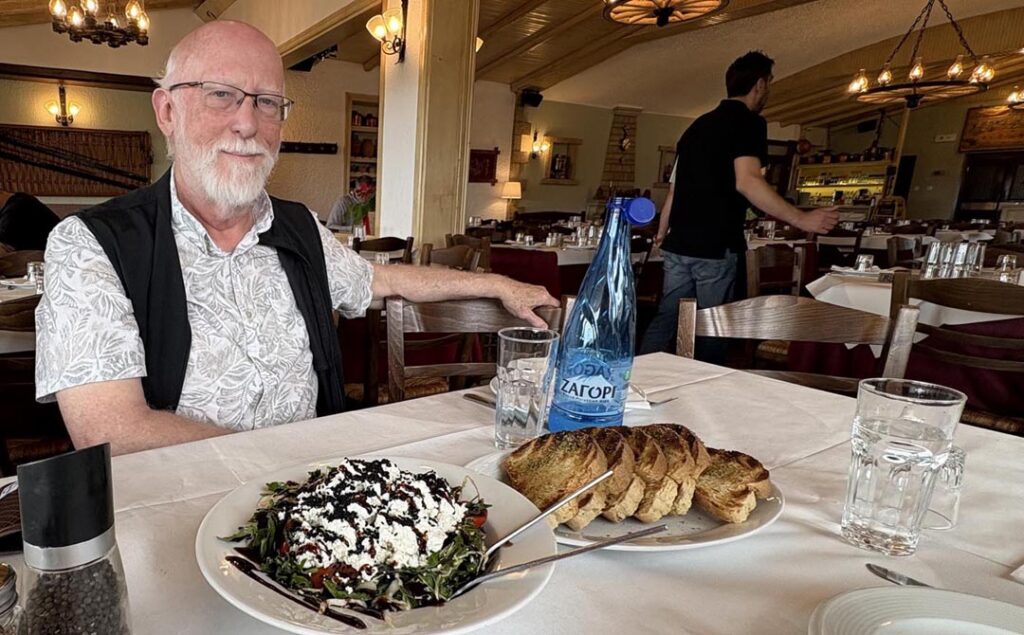
Outsider Observations On the Greek Classics
Gyros This was surprisingly different from home. Rather than a ground mix of beef and lamb, it was pork, stacked on the spit in slices, like shawarma. Accompaniments are the same as here, with the exception that if you order a sandwich/wrap, a handful of fries are tucked inside. And “No, you can’t have them on the side.”
Greek Yogurt Vastly thicker and richer than grocery store versions stateside, it’s as luscious as sour cream, used as often for savory purposes as for sweet snacks.
Feta This was quite different from the entry-level packaged stuff in the grocery stores here: less salty, less dry and crumbly, more creamy and more evidently sheepy and/or goaty. You can get these authentic types in the US, but you have to seek them out. Pre-packaged Feta is not worth buying unless you really crave that crumbly saltiness.
Salads I suppose this shouldn’t have been a surprise, but there’s way more variation than Greek salads we’re used to in the States. And even the classic was different, with one server telling us there is “never any lettuce in a proper Greek salad; it’s the cheapest ingredient.” So that leaves cucumbers, tomatoes, raw red onions, red and green peppers and feta, soaking in a generous olive oil and lemon vinaigrette, sometimes with capers, too. Olives, however, were enjoyed elsewhere and not the norm in salads.
On Crete they usually skipped the peppers and onion, used Galomizithra cheese (see below) and added airy toasted bread rusks (dakos); some versions included boiled potatoes or conversely, were mostly tomato.
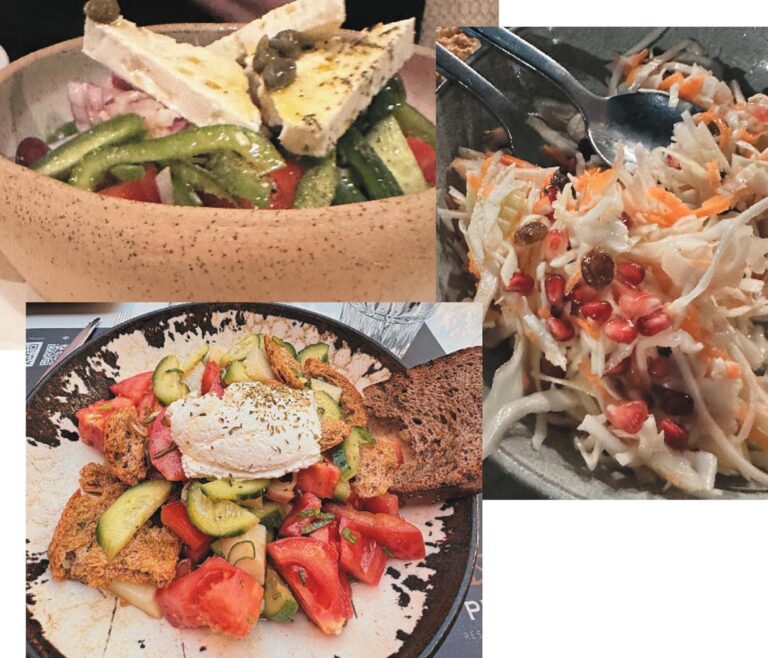
Clockwise from left: classic Greek salad, a tasty slaw with pomegranate seeds and a propper Creatan “dakos” salad with bread rusks.
There were many more: a kind of slaw with carrots, Florinas (sweet red) peppers and pomegranate seeds, topped with a lemon dressing; a spinach salad topped with very soft Mizithra (a whey cheese similar to ricotta), crowned with curls of paper-thin spicy salami (like soppressata) and orange dressing; a beetroot salad with tomatoes, Katiki cheese (spreadable sheep and goat), green apples and walnuts, a seasonal salad with figs, pears and walnuts; and arugula with a little shredded cabbage, topped with Mizithra and sweet balsamic glaze, with grilled bread.
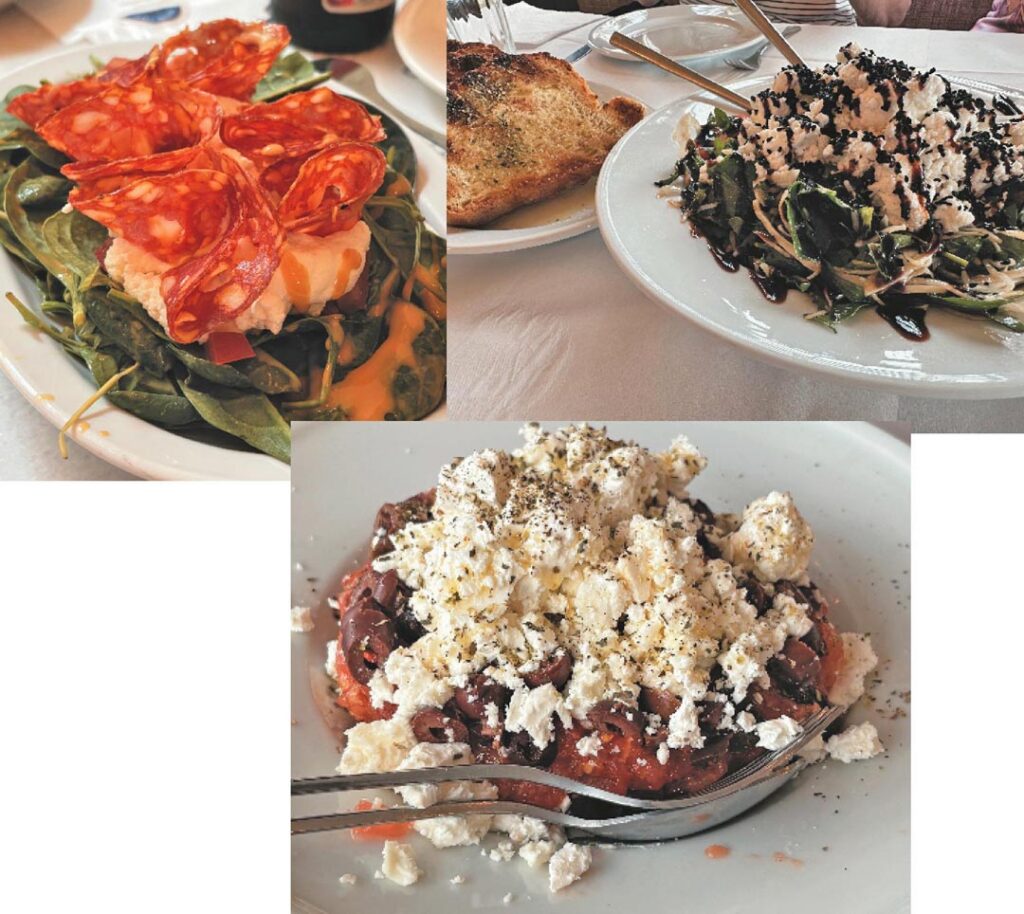
Three inventive salads, described above.
Greens Historically, these are a really important aspect of Greek food, as a nutritional adjunct to starch, meat, beans and pulses, just as they were in in ancient Mesoamerica. Wild, even today, they’re varied, tasty and seasonal. Greens include dandelion, chicory, wild asparagus, purslane and many others.
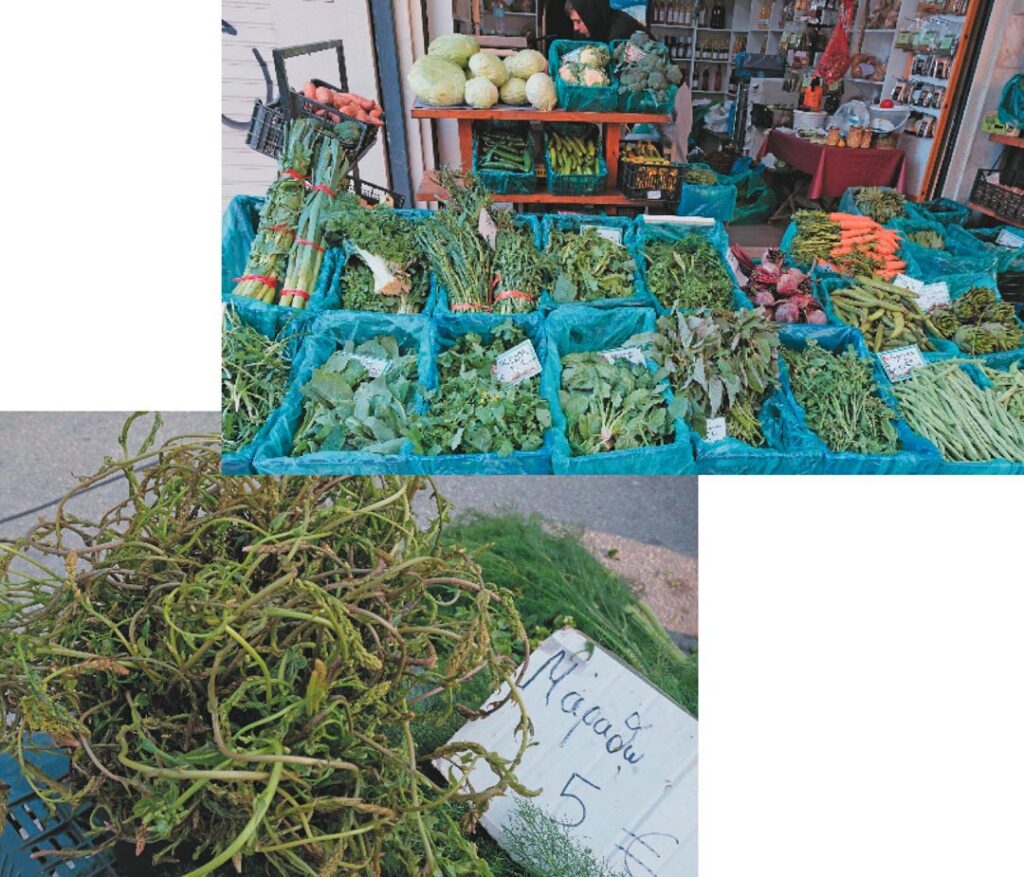
A selection of greens at a market stall in Heraklion, Crete. Truly wild (and crazy) asparagus below.
Meze As simple as a little bowl of olives, these Greek “small plates” encourage sharing and offer opportunities to try a lot of things without overstuffing oneself.
Saganaki In Greece, this is typically Graviera or Kefalotira type (hard or semi-hard) cheese, breaded and deep fried. We had a particularly tasty version encased in a hazelnut crust. Grilled Haloumi cheese fits into the family and is pretty tasty, as this cheese doesn’t doesn’t melt. I’ve seen it sold pre-grilled, in packages here. Saganaki, however, is a broader concept that also includes baked cheese dishes with mushrooms, shrimp and more.
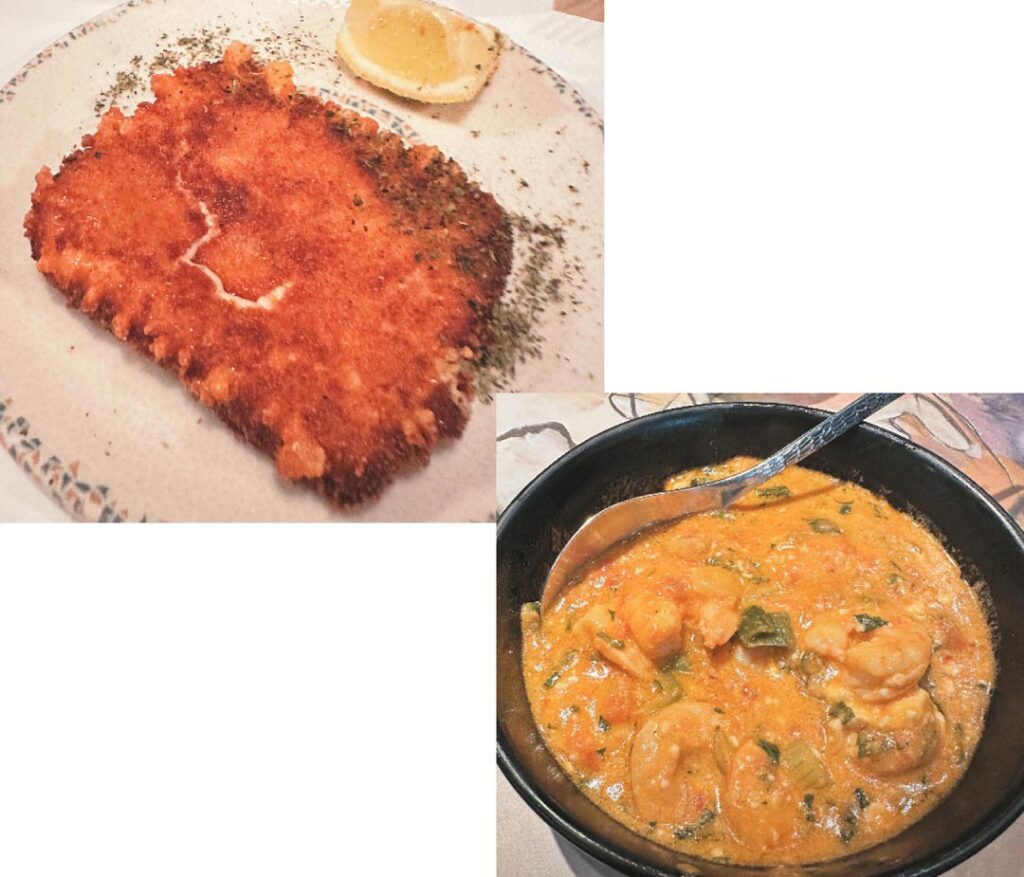
The classic and a more adventurous variation: shrimp saganaki at Antipodes, Iraklion, soft cheese enriches a light tomato sauce with fennel.
Moussaka and pastitsio These are both dishes invented in the mid 19th century as Greek chefs were incorporating French techniques—the custard topping, specifically. Versions we tasted were delicious, but pretty much the same as the ones we’ve tasted (and made ourselves) here.
Dolmadakia Found on almost every menu, we learned the grape-leaf version is a more special and seasonal variation. The everyday version uses cabbage instead of grape leaves, more like Polish golabki. Cabbage dolmadakia are commonly topped with avgolemono (egg-lemon) sauce. In the US, we often incorrectly call them “dolmades.”
Rice Except for its use in dolmadakia, we saw very little rice on menus.
Lamb This is generally a special occasion “feasting” food, so it is uncommon on most menus. The day after Orthodox Easter, some leftover spit-roasted lamb was still available so I had a go; tasty!
Seafood This has always been a luxury, with a character in a Classical Greek play complaining about the high cost of fish. In addition to many regions’ obvious proximity to the sea, strictures imposed on fasting around Orthodox holidays have kept seafood and especially mollusks and crustaceans—considered more acceptable for fasts than bony fish—front and center in Greek cuisine. Simple is best, usually. The dishes we tasted didn’t disappoint.
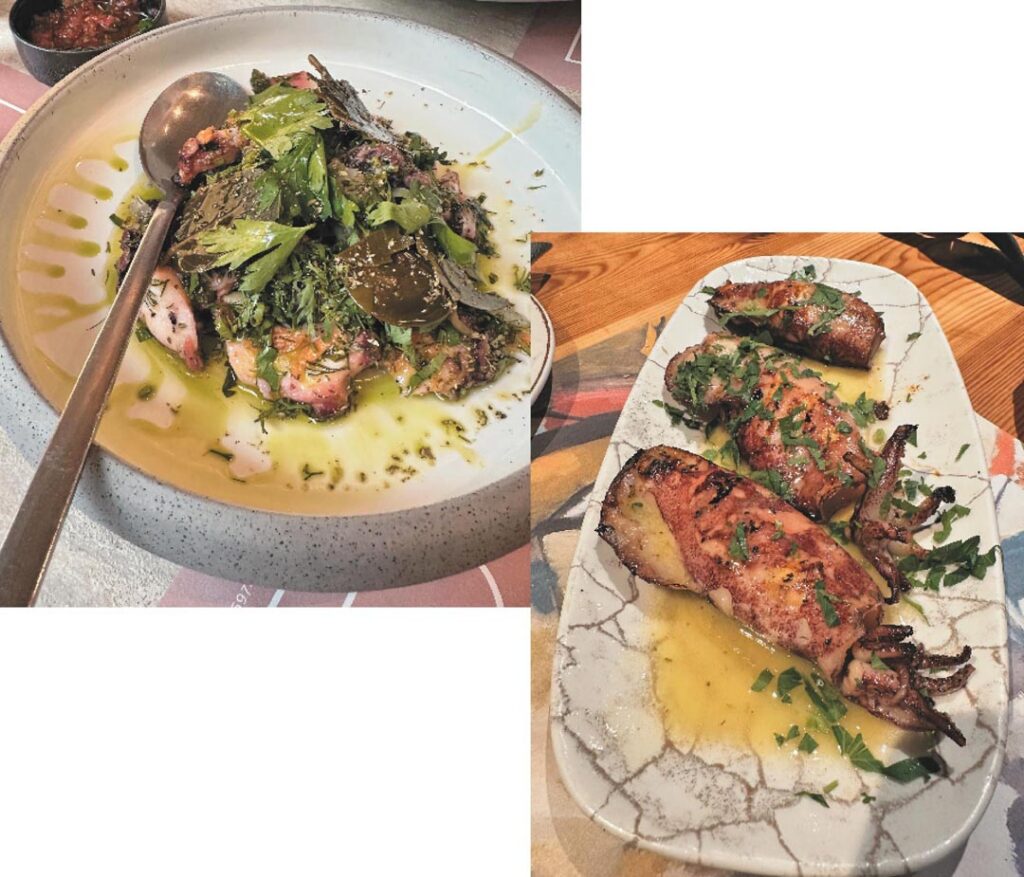
Cold marinated octopus at Canale, in Rethymno and grilled squid at Antipode in Heraklion, both on Crete.
Baked goods They’re everywhere, always fresh and fabulous. The bread’s quite varied; some fairly dark, with rye occasionally. Bread for the table was sometimes oiled and grilled, especially on Crete. Greek white bread is yellowish because of the semolina hard wheat used. The pastries are not super fancy, but omnipresent and fresh. Both the sweet and savory versions are great for breakfast. On Crete, super-light, crispy rusks eat like crackers and are often used in salads, like large croutons. These dried-out chunks of bread appear to have been used as an extremely portable food; without the water, they’re much lighter and will never spoil. Baklava was plentiful, but as it was explained to us, “It’s 100% Turkish—the word, too.”
Bulbs This was a fun surprise. Flower bulbs, mainly hyacincth but sometimes others, are peeled, parboiled, stewed for hours, pickled and served as mezze. They’re tangy, reminiscent of cocktail onions and would serve that purpose in a martini.
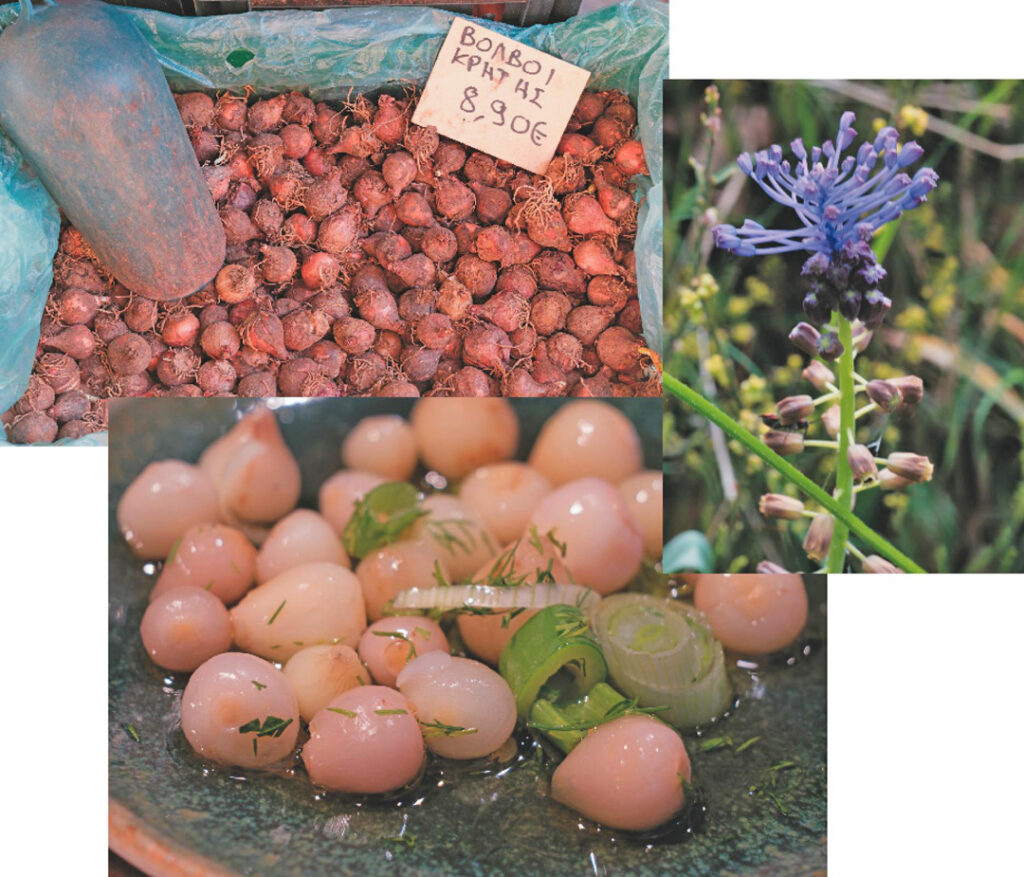
Raw bulbs for sale, the wild hyacinths from which they come and the cooked, pickled form at the table with some shaved fennel.
Herbs These are a point of pride, especially in mountainous Crete. The most unique culinary herb there is called diktamos, aka dittany or Cuban oregano. A kind of thick, fuzzy oregano, we’ve grown it in Chicago in an herb pot, as it’s sometimes available at spring plant sales. It has a bright, sharp oregano aroma with hints of woody turpentine when fresh, although it’s mainly used dried. It’s also incorporated into some liqueur/vermouth recipes I have from old books, and we saw “sausage with dittany” on one menu. Since we didn’t have a chance to try it, I may have to attempt to duplicate that sausage at home. There’s a nice family-run shop in the market area in Heraklion called Grelia that has a wide variety of Cretan products.
In the wild, we saw giant and regular fennel, sage, wild almonds, mountain tea and borage. A list of edible plants at a Late Minoan Bronze Age cemetery near Rethymno mentioned milk thistle, wild parsley, water dropwort, asparagus, shepherd’s needle, grape hyacinth, bulb dandelion, common brighteyes, thyme, Mediterranean hartwort, bunny grass, beard-of-the-goat, Queen Anne’s lace, black nightshade (toxic, FYI), sow thistle “…and others.” Fig trees were plentiful and Crete is also a major growing region for carob.

Herbs in the Late Minoan Cemetery near Rethymno, Crete (from top left): borage, fennel, sage.
Stofado These are baked (stewed) meat dishes, most famously rabbit or goat, with tomato (chunks and paste) and small whole onions. A hearty mountain dish, traditionally, they are cooked during the day in bread ovens as they heat up.
Apakia This is heavily smoked pork, traditionally, loin or tenderloin. It’s first marinated in vinegar and has a bit of cumin; thyme and other herbs are used in the smoke. Seems to have a more northerly influence.
Cheese Because of its rugged landscape, Greece is home to countless sheep and goats, their milk being the mainstay of Greek cheese—almost exclusively. The cheeses break into three main categories: fresh and aged whole milk cheese, and whey cheese (of which Italian ricotta s the most widely known). Goat has high protein, low fat and the most animal-like character, love it or hate it. Compared to cow milk, sheep milk is generally fattier, with more protein and just a hint of animal character, which gives it great depth. All common Greek cheeses can be made from sheep or goat milk or a blend. as is true elsewhere, choosing a Protected Designation of Origin (PDO) version will get you the real deal, not a bland industrial knockoff.
Kefalotyri: a firm cheese, usually with some aging. Its high melting point and moderate intensity makes it great for saganaki.
Graviera: Greece’s most fully aged cheese, with a nutty flavor and firm texture that is sometimes compared to Gruyère, which it resembles superficially. It’s not uncommon to see cow’s milk incorporated, too.
Mizithra: A whey cheese, available in two versions: fresh and soft or hard, briny and suitable for grating. Neither will melt under heat.
Galomizithra, Specific to Crete, this is a very soft, fresh cheese ideal for use in salads.
Haloumi: A semi-firm cheese from any milk source—most commonly grilled or fried
Katiki Domokou: a sheep + goat PDO cheese that’s soft, a little tangy, not too salty and ideal for topping salads.hard
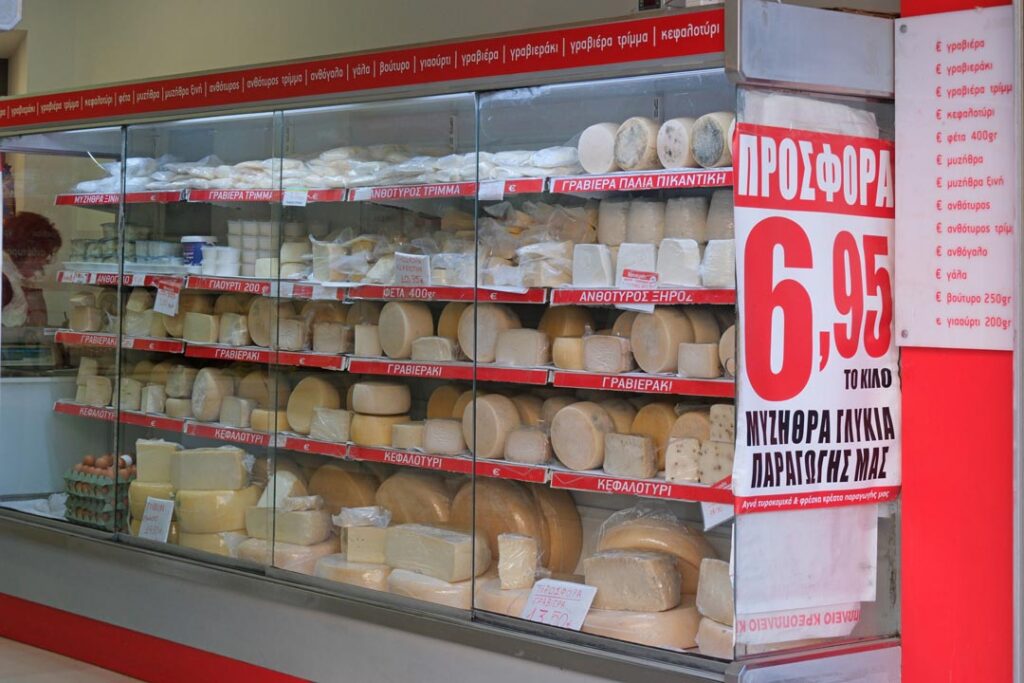
A cheese stall in the market area of Heraklion
Standout Dishes: What’s On the Menu?
Apakia at Well of the Two Turks: Very simple presentation: slices of smoked loin, w cheese curls, salad w/orange.
Apakia at To Pigadi, Rethymno: A composed stack with apakia, mushrooms, peppers, thyme, rosemary, rich stock, cherry tomatoes, on toasted bread, topped with/poached egg. This was my single favorite dish of the entire trip.
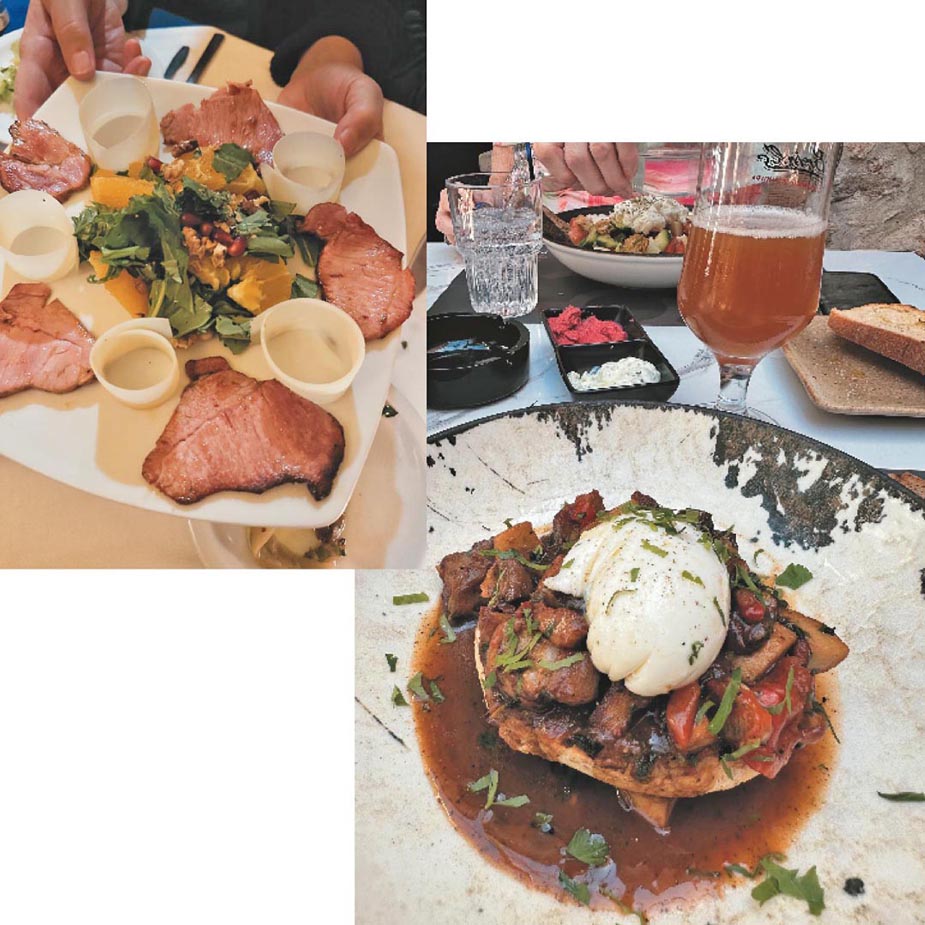
Two versions of the smoked pork dish, apakia.
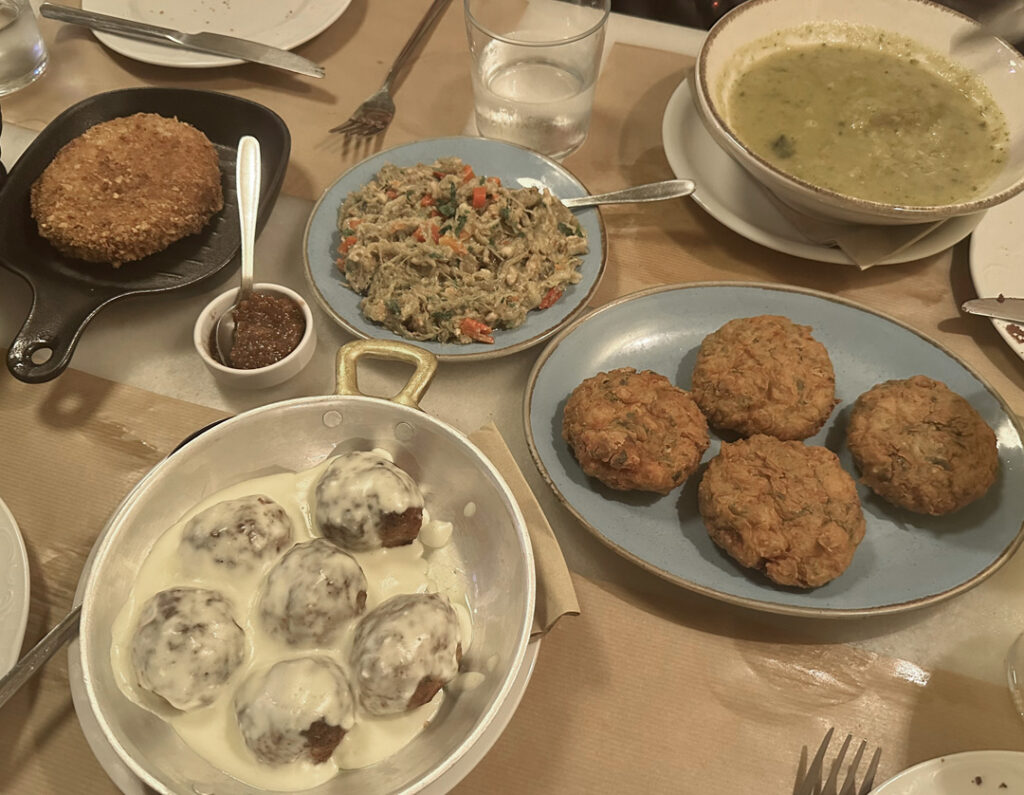
Meze from Tamam, in Chania, Crete: Meatballs in (mornay) cheese sauce; Tomato fritters: coarsely chopped tomatoes miraculously held together with/ something (bread, eggs?); Smoked eggplant salad: Very coarse babaganoush w/tomatoes, walnuts, parsley, garlic; Saganaki in hazelnut crust, with fig jam.
Most Interesting Meals
Farmasea, Rethymno, Crete
Chef’s choice mezzes in flights of three on the waterfront at Rethymno. We had fried sea bream, grilled Haloumi cheese w/fig jam, paprika fried shrimp, fava purée and four more. Informative conversation with engaged server, too.
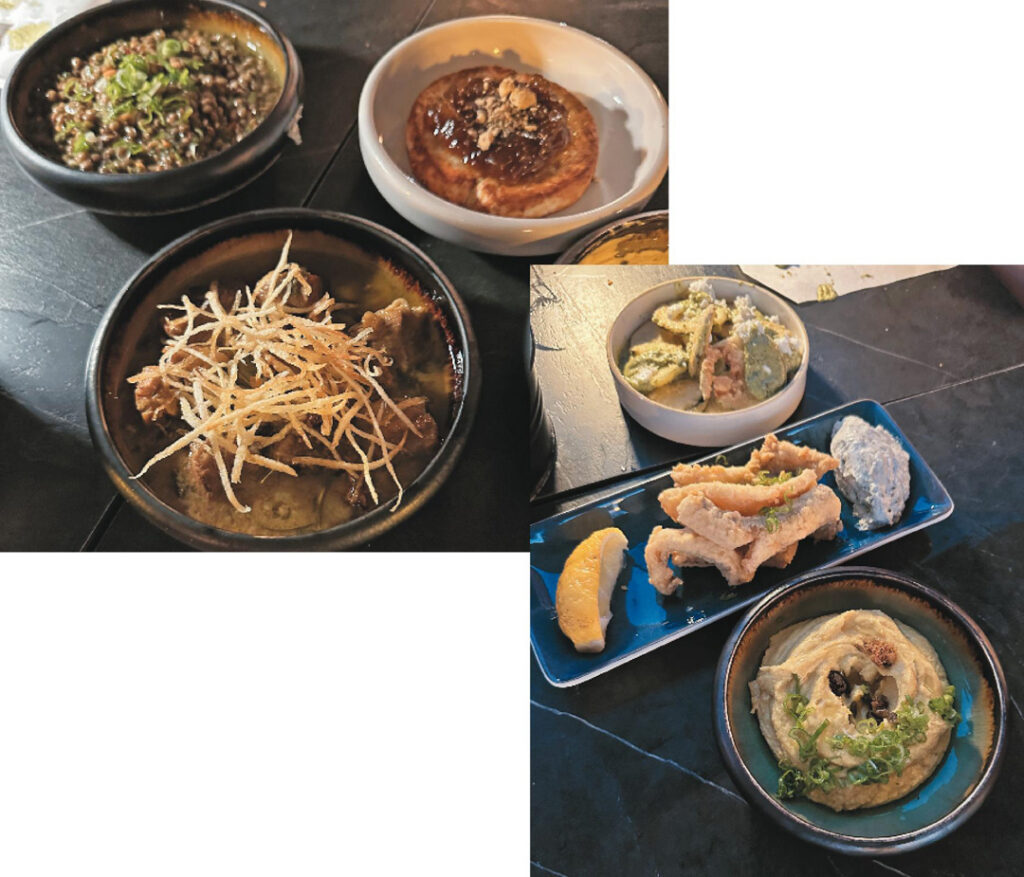
Chef’s choice meze at Farmasea, in Rethymno, Crete, including lentils, grilled Haloumi cheese, a rich meat stew with matchstick potatoes, fried sea bream and more.
More Feelings, Koukaki, Athens
A small shape-shifting bakery/café/restaurant with affordably upscale creative twists on Greek cuisine without too much reference to the classics. Steamed mussels, Stuffed pasta with shrimp, shellfish bisque and coffee (sprinkled on top), pork (?) with udon noodles, shaved cheese, rich stocky sauce.
To Pigani, Rethymno, Crete
Gem of a place in Old Town recommended by a nearby vendor. Gorgeous inside/outside space, serving traditional, Crete-specific dishes, including the apakia and mushrooms topped by a poached egg that was my single favorite dish of the whole trip. Book ahead for dinner.
Antipode, City Center, Heraklion, Crete
The only place went back to, mainly for the grilled squid, since Nancy missed it the first time. Shrimp saganaki was delicious, too. Lively place with great decor. Book ahead.
Tamam, Chania, Crete
Intimate, busy place in an old Turkish bath—which explains the pit-like center—with fabulous dishes noted above. Different dishes, with more of what you might think of as Middle Eastern influences. Name in Turkish or Arabic means “fine” or “O.K.” Solid craft beer list, which is not that common. Book ahead.
Most Unexpectedly Fun Place
Mavros Katis, Heraklion, Crete
We were starving after flying in at night from Athens and spending nearly two nightmarish hours following bad directions through Heraklion’s too-narrow streets with our too-big rental Peugeot. Fortunately, restaurants in Greece stay open late. It took us a while to find it, but we enjoyed our late-night meal at Mavros Katis (black cat), a funky dive-bar joint full of young people. Food was fresh; staff was friendly.

Further Reading
One book I read before the trip was Gifts of the Gods: A History of Food In Greece. This is a fairly scholarly account of Greek cuisine going back to the Neolithic. It was really helpful in setting the context for all we would taste and see.
While I was on Crete, I picked up a small book simply called Cretan Cooking: Traditional cookery Recipes from Crete. After an informative introduction, it’s full of nona (grandma) recipes, with delightfully imprecise quantities, covering most of the basics. A good introduction to this fascinating subset of Greek cuisine.