
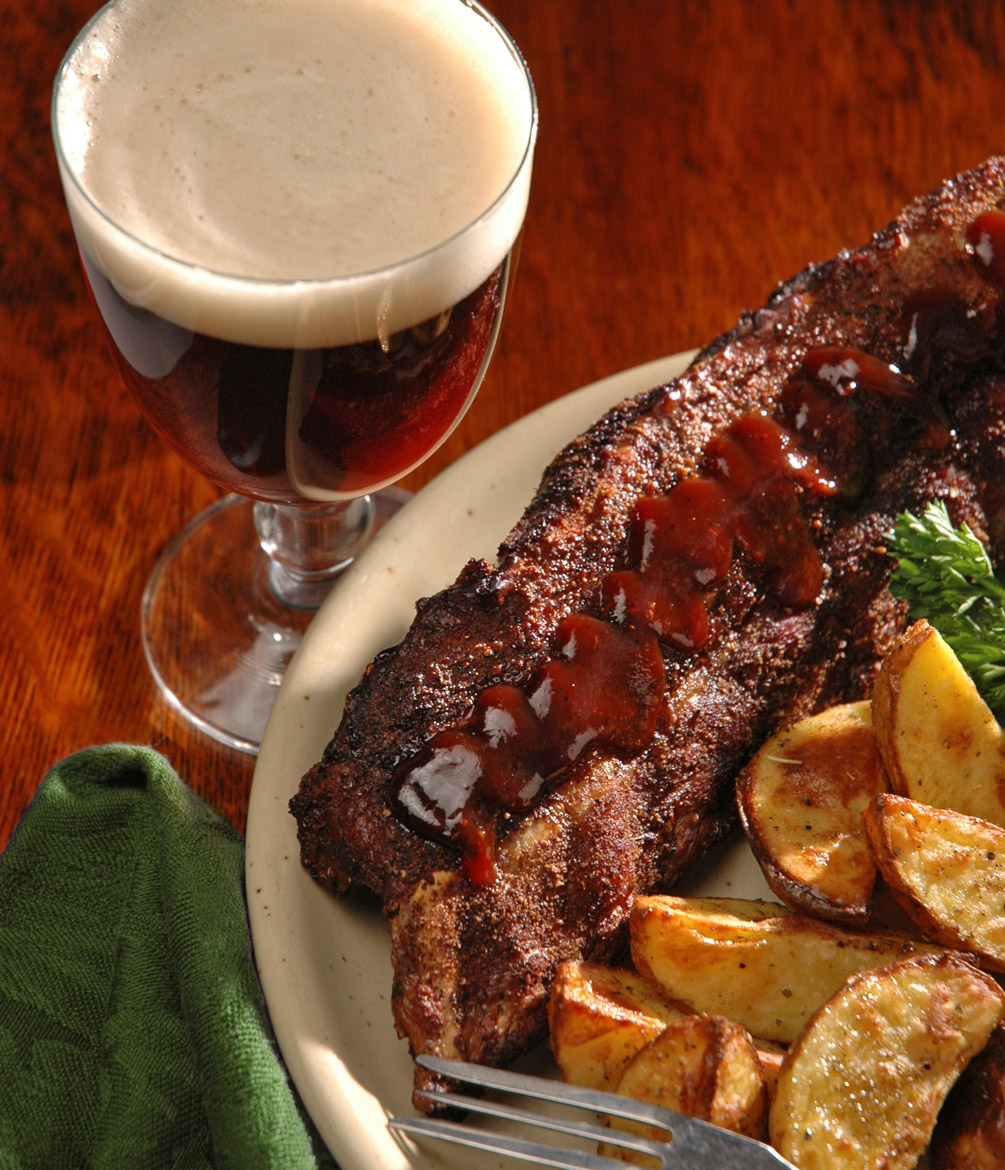
Like many cuisines, barbecue stirs up deep passions that verge on religious fervor–in both good and sometimes slightly alarming ways. But it seems to me that a lot of the energetic debates center around meat (of course) and the time, temperature and various options on wood and smoke, all of which are indisputably important. Not mention the fine points that come up when debating regional approaches.
What seem less discussed are the seasonings: rub, mop, sauce and the spices from which they’re made. Many people seem happy to go with the most basic traditions or premade spice mixes. For sauce, it’s all too common to see someone just grab a commercial one off the shelf, possibly modifying it a little. Turning something so crucial to the final flavor of barbecue over to faceless entities is kind of horrifying to me.
Since I’m an experimental kind of guy who’s fascinated by the sensory effects of spices, I’ve been making my own “master” spice mix for about forty years now. My first batch was simply an attempt to recreate the spice character of the sweet Midwestern sauces that were all I had experienced at the time. I’ve grown more sophisticated about it over time, adding and deleting different ingredients to suit my needs.
I recently researched and wrote a book on the science and practice of tasting. While I got a ton of insights along the way, with my spice mix they mostly verified that I was on the right track with my approach: create as much complexity and different sensations as possible while still feeling like barbecue.
Functionally, here’s how it works. Once a year or so, I mix up a new batch of master mix consisting of about 30 different herbs and spices that fall into one or more of four groups: aromatic spices (think cinnamon, etc.), green/herbal ones and vegetal types like onion, chile, and celery seed and finally those like dry mustard that have mouthfeel effects. Here’s what’s not included: garlic, very hot chiles, salt and sugar—all of which are best added to rub, sauce or other depending on need. I never add smoked anything; that’s what the pit is for.
There’s nothing special about mixing up the ingredients, although I like to grind the peppercorns, coriander (the pre-ground stuff is useless) and some others myself. I buy ground chiles that still have their vibrant color and flavor from Mexican supermercados. I keep the bulk of the mix in the freezer and a smaller jar in my spice cabinet.
I use this master spice mix every way but by itself: a little to flavor rub, brine or mop, and more to mix with sweet, sour and tomatoey ingredients to make sauce.
Mouthfeel in the Mix
There’s no salt, sweet or sour tastes in the spice mix; those will all come later. There’s plenty aroma and mouthfeel, though: a specific blend of chile, pepper, onion, cake spice, a touch of herbs that personifies barbecue aroma. Scientists talk about recognizable aromas composed of multiple subcomponents as being “configural”—smells that resist deconstructing into their parts. I think barbecue works that way, too.
When I started my spice mix, I instinctively added every kind of spice and herb that could give me any kind of burn. Although I had no idea what I was doing, it turned out to be a solid strategy, with a lot of fascinating sensory science and millennia of cultural practice behind it
Mouthfeel is a whole set of sensations caused by mechanical and thermal touch sensors in our mouths and nose identical to ones all over our skin, and throughout the body. Of the two main mouthfeel types, the one that’s simply about texture is less important here. The one we’re focusing on involves thermal receptors that sense heat and cold. For some weird reason, chemicals in chiles, mustard, mint and many common spices hijack these thermal sensors in a process called chemesthesis, delivering sensations of heat and cold identical to the genuine article, plus numbing and tingling, too.
For heat, two different thermal receptors are involved: TRPV1 and TRPV1. The first brings the familiar burn of capsicum and piperine found in chiles and peppercorns. Mustard, ginger, cinnamon, grains of paradise and raw onions all create a short-lived prickly hot sensation in our mouth and nose via TRPA1. Cool sensations involve different receptors, and although they’re hugely important in toothpaste, we don’t much care about them here.
Many common spices—clove, thyme, oregano—can create numbing sensations, although they’re minor in this context. Most bring useful aromas, too. A unique tingling sensation often called “electric” is stimulated by Szechuan peppercorns (flower pepper), actually several species of prickly ash. The touch receptors here have a natural proclivity to resonate at about 10 Herz, which is normally tamped down. In the presence of alkylamides (like hydroxy-alpha-sanshool) found in the peppercorns, the cells are disinhibited and transmit their unique vibratory sensations.
These mouthfeel sensations are an important sensory characteristic of barbecue seasoning and sauce, and many of the spices that flavor them. In Szechuan cuisine, the term “ma-la” (tingling + heat) is used to describe this valued character. These mouthfeel characteristics have different intensities, onset times and durations. Chiles have multiple capsicum-like chemicals, each with different characteristics. Chefs and spicy food manufacturers use them to manipulate the spicy effects.
Overall, the mouthfeel aspect is one of the things, along with aroma and taste, that contributes to the overall flavor of barbecue. One of its main benefits is to create a long-lived sensation in the mouth that changes over time as certain sensations build and drop out. Capsicum is always the last to go, as its oily character allows it to cling to the fatty cell walls of the membranes lining our mouths. So when you’re building your recipes, pay particular attention to the time dimension.
Ingredients and recipe
The recipe is below. but first are a few comments on seasonings that may be unfamiliar to some people or may seem out of place here:
Ajwan
A seed in the carrot family with an intense thyme aroma. It’s used in cuisines from India through the Middle East.
Black seed/nigella/charnushka
Small black trapezoidal seeds with a complex, savory, slightly floral character. Often used in baked goods from the Middle East to Central Asia and Russia.
Cassia and cinnamon
What we Americans think of as cinnamon is actually cassia. True cinnamon generally comes from its origin in Ceylon, and now Mexico. It has far less aromatic oil, but a more complex and woody aroma than cassia. Cassia buds resemble cloves, but smell of Dentyne gum.
Chiles
I have mainly settled on a mix of guajillo and ancho chiles. For me, guajillo represents the bright and lively side of chile aroma. Ancho, the chocolate-brown dried version of poblano is the other side of the coin: deep, rich and leathery, with dried fruit notes. You’ll have your own preferences, but I like the complexity that these two chiles bring. If I can find pasilla, I’ll add that, too.
Cocoa
Everybody knows what this is, but I started using it when I lived in Cincinnati, where chocolate is commonly added to its unique chile to deepen its flavor. Does the same thing for this mix.
Coriander
These are the dried seeds of the plant whose leaves we call cilantro. They’re popular all over the world and different varieties can be found in Asian, Latin and Middle-Eastern markets. One of their main aroma constituents is a terpenoid called linalool that is also found in hops. Generally, it presents as orange + lavender, but never assume all varieties taste the same. Character can range from orangey (Indian) to piney (Middle Eastern) to eucalyptus (Chinese) to Mexican (cilantro). I use a mix.
Galingal
Popular in Southeast Asia, this ginger relative is spicier, but less aromatic.
Grains of paradise
These small, hard seeds pack an intense mustardy heat, plus an aroma of white pepper and plywood. A little goes a long way.
Marjoram
This European herb has a pleasant floral character. It’s important in polish kielbasa, which makes it a great fit for any smoked meat in my book.
Mexican oregano
It’s not an oregano at all, but in the verbena family. To my mind, its aroma is much more like bay, with a lot of cool top notes, and it’s great for enhancing the flavor of meat. I recommend grinding any dried herbs in the spice mix into a coarse powder if you don’t want to be picking leafy bits out of your teeth.
Onion (and garlic) powder
I prefer the toasted type, granulated rather than powdered. This stuff brings massive umami, very synergistic with meat.
Oregano – Greek
I find the ones sourced from Greece to be brighter and more true to character than generic types.
Usuza Seed/Guinea pepper
These look like small allspice berries, but it’s a peppery African spice with a complex aroma.
Randy Mosher’s Herb and Spice Master Mix (about 700 grams/25 ozs)
Allspice 30 grams
Ajwan seed 5
Black seed/nigella/charnushka 10
Caraway 5
Cardamom—white/green 2
Cassia buds 25
Celery seed 30
Chile—ancho 45
Chile—cayenne (as you like, for heat)
Chile—guajillo 65
Chile—pasilla 60
Cinnamon—cassia 20
Cinnamon—Ceylon 30
Cocoa 25
Coriander—Chinese 20
Coriander—Indian 30
Fennel seed 10
Galingale 15
Ginger—ground 15
Grains of paradise 15
Mace 5
Marjoram 10
Mustard—Chinese 20
Nutmeg 5
Onion powder—toasted 70
Oregano—Greek 10
Oregano—Mexican 15
Pepper—black 100
Pepper—Szechuan flower 20
Pepper—white. 30
Star anise 10
Uzusa seed/Guinea pepper 10
There’s nothing magic about this batch size, so scale it however it works for you. It’s possible to guesstimate weights, but actually weighing is much more repeatable. I encourage you to modify this recipe as you see fit, but I have found if great for use in all types of American barbecue.
Next time, I’ll dig into sensory characters and ingredient possibilities for several different kinds of delicious sauces with this mix at the core. I know we’re heading into fall, but happy smoking anyway!