ddp-postrbg2sqmrq

Tasting Is Impossible. Knowing Why Is Half the Battle

Watch an expert pick up a glass, give it a quick sniff and instantly the complexities of a wine or beer are translated into a few choice words. It looks like simplicity itself, but try to do the same thing as a novice and it’s often an epic struggle. Experts may make it look easy, but it takes a long time to get there. There are many barriers, not the least of which is that tasting is a deeply unnatural act.
ob-procss2-3mr

Olfactory Bulb Signal Processing, Part 2

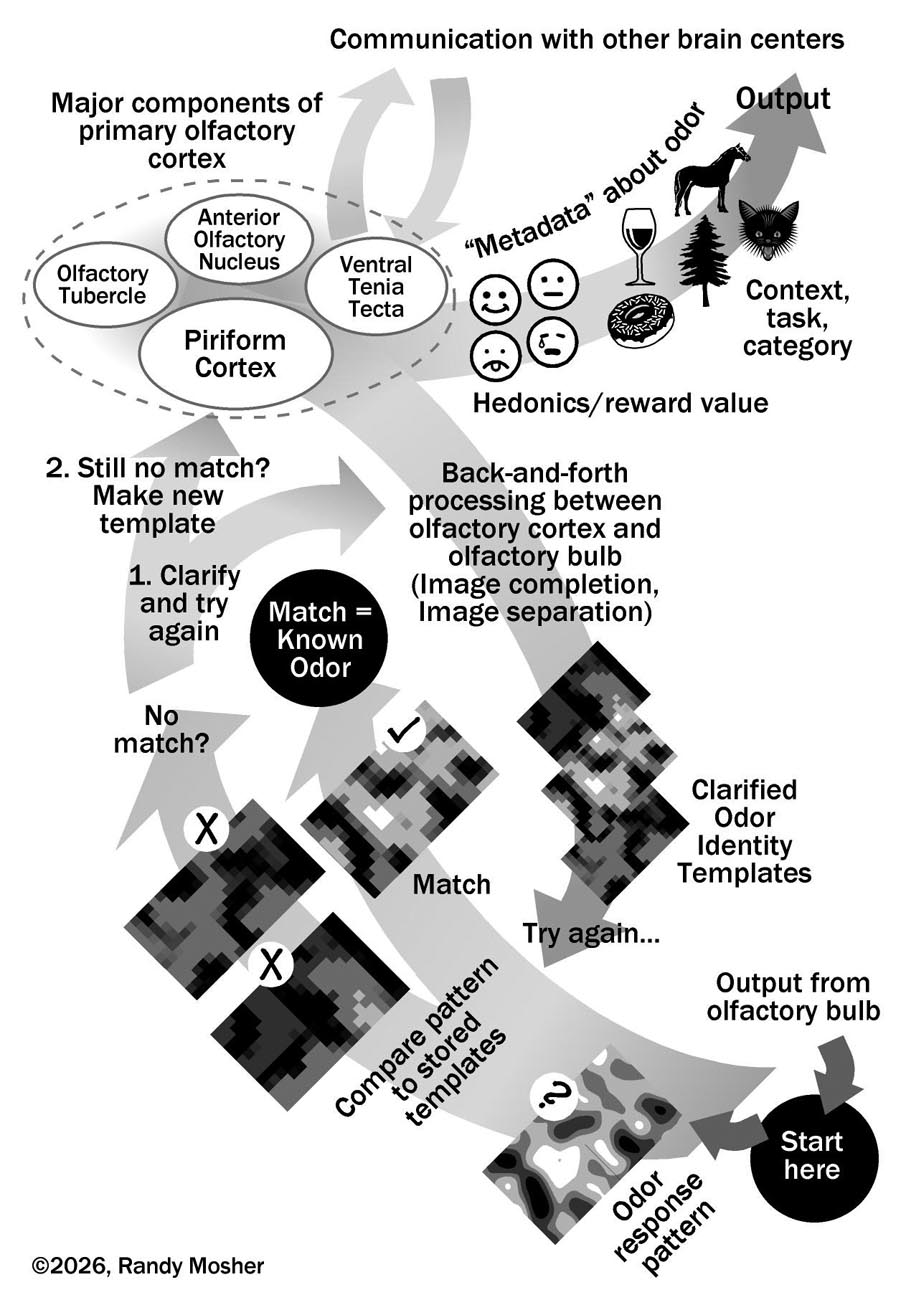
About the size of a kidney bean, our olfactory bulb is one of the smaller parts of the human brain, and also one of the more amazing. Its prime function is to process signals from a host of olfactory neurons, then serve their response patterns up to the brain, which recognizes odors based on past experiences.

licia09beercafe1cmr

What’s Going On in the Olfactory Bulb?

Part One: Signal Processing

Unlike manufactured systems, our senses can’t rely on highly accurate and linear sensors to convert external stimuli into usable signals. Biological systems are inherently variable, noisy and limited in range, yet we need clear and accurate information to guide our behavior. How do we manage to do this?