Jeffpaas1

A Spring Fling Thing

People these days long to be a little more in touch with the rhythm of the land and the weather; a lively parade of seasonal beers is a delicious way to do it. And while commercial beers are nice, if you brew it yourself you can have a beer perfectly suited to your taste and mood, season after season. Right now the gales of winter are still blowing, but spring is just around the corner. Time to get brewing. 
bbl02grp4

Brewing the Perfect Party Beer

As homebrewers, we are often called upon to brew something special to celebrate a milestone: a wedding, a graduation, or just surviving another year in the cubicle. And when the audience is entirely beer-maniacal, anything goes. But the real test of a brewer is to please those used to cold, chilly and bland, while upholding your homebrew oath to always brew something interesting. It’s a balancing act that requires the brewer to deconstruct the beer preferences of his or her audience and assemble a subtle, but compelling, recipe. 

cbf2a2cmr

Freakin’ the Euro-Beers

It is our right as Americans to seize on tidbits of history, jumble them up and invent whatever kind of story is appealing. So let’s get on with that and start thinking about the beery possibilities. Note that the quantities suggested are for five-gallon batches. All of these should be fermented conventionally with lager yeast and given a cold conditioning commensurate with their strength. Don’t forget the diacetyl rest, a couple of days at cellar temperatures to allow any excess diacetyl released by the yeast to be reabsorbed. 

stras-frcanal1mr

Beer Marches On

American industrial lagers and light beers already reign in lawnmower-land, and they do serve their purpose. But as homebrewers, we can see obvious room for improvement to suit our own creative instincts and particular tastes. So here’s a few mini-recipes, which I leave to you to flesh out into actual malt, hops, wheat, oats and whatever else you can think of.

CBF5a2mrc

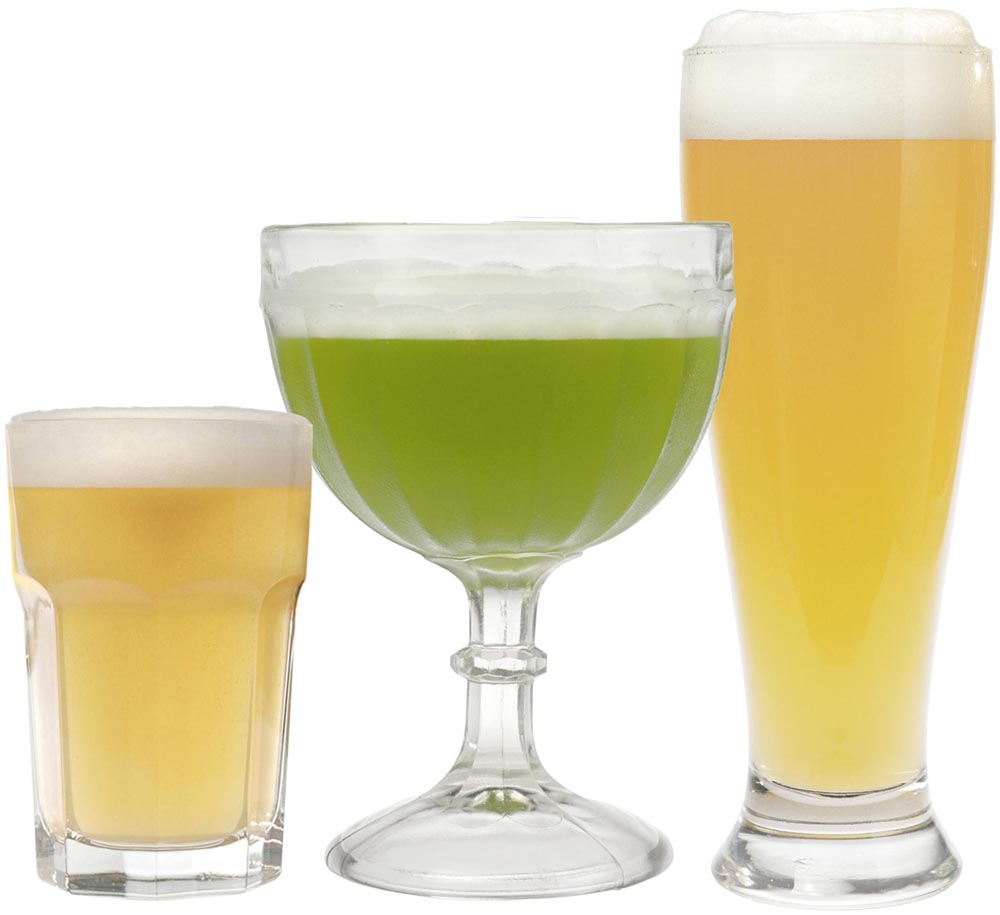
Blanche de Noire

American industrial lagers and light beers already reign in lawnmower-land, and they do serve their purpose. But as homebrewers, we can see obvious room for improvement to suit our own creative instincts and particular tastes. So here’s a few mini-recipes, which I leave to you to flesh out into actual malt, hops, wheat, oats and whatever else you can think of.

wheatbeers1mr

A Yardfull of Lawnmower Beers

American industrial lagers and light beers already reign in lawnmower-land, and they do serve their purpose. But as homebrewers, we can see obvious room for improvement to suit our own creative instincts and particular tastes. So here’s a few mini-recipes, which I leave to you to flesh out into actual malt, hops, wheat, oats and whatever else you can think of.

itjudge1lmrc

The Bittersweet Taste of Tradition

As art, every beer is part of a larger story, and comes out of a specific context, whether it’s a traditional classic or an avant-garde experiment. These stories, technological guideposts and aesthetic characteristics shape not only the specifics of the drink itself, but our expectations, attitudes and ultimately the nature of our interaction with it. Tradition is a metaphoric bucket for certain ideas that get poured into beer along with the malt and hops.

Wine waiter woman during blind tasting various alcoholic beverages. Sommelier exam to study different wine and beer.

Getting to Know Your Malts

It’s obvious that we human beings are all pretty different from one another—in appearance, experience, attitude, gender, and countless other attributes. Each of us has things that come effortlessly and others at which we struggle. It goes without saying that these differences affect our abilities as tasters. But how, exactly?

1 3 4 5 10